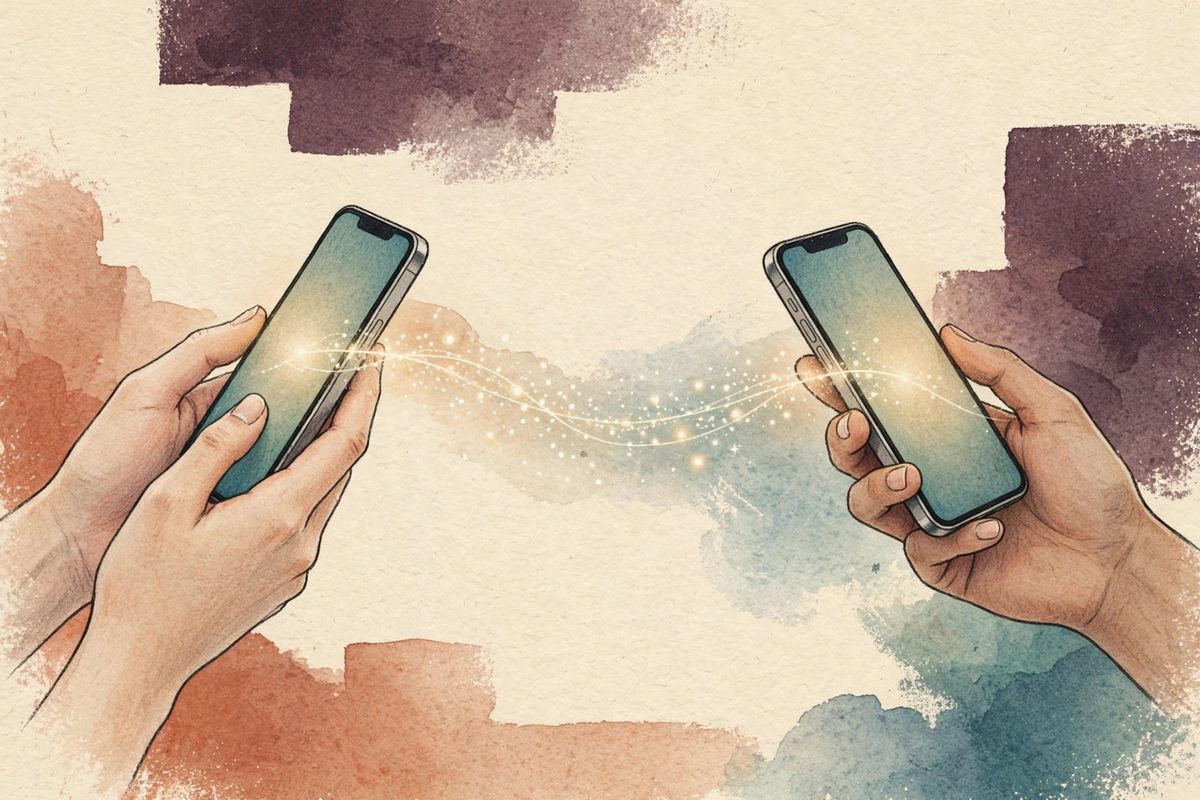
From attachment theory to everyday conflict, Interpersona translates research on personal relationships into insights you can actually use, in plain language.
Our Mission
The people closest to us shape our days more than almost anything else: how safe we feel, how we meet stress, and how we recover when life goes wrong. Yet most of the research that explains those connections is written for other researchers, in language few readers would choose.
"From weak ties to close relationships, every human connection shapes who we become."
Interpersona exists to close that gap. We read relationship research carefully and explain it plainly: what was studied, what it found, what it cannot prove, and what it might mean for ordinary life. We also keep an archive of relationship research volumes, reachable at the addresses their citations use.
Explore
Latest
FeaturedJohnson and Bliwise built a relationship online, reply by reply, and watched attachment anxiety fall. What the study found, what it cannot prove, and why it still matters.

One of the most cited early maps of internet romance, read again in the app era. What still holds, what has dated, and what it got surprisingly right.
Self-Reflection
A short self-reflection drawn from attachment research: ten questions about how you respond when the people close to you feel far away.
For reflection. Your answers stay in your browser.
Start the self-reflectionA Practical Guide
Research can explain a pattern. It cannot sit with you while you change it. If you are thinking about couples therapy, the useful first step is knowing what good couples therapy looks like and what to ask before you book.
Read the free guideCouples work is a specialisation. Ask about training in an established approach, such as EFT or the Gottman Method, and about experience with your actual issue.
In Ontario, psychotherapists are registered with the CRPO. In the UK, look for BACP or UKCP. In the US, state licensure. Registers can be checked in minutes, and a real practitioner expects you to check.
Both partners should feel heard, neither should feel ganged up on, and the therapist should explain how they work and what progress would look like.
For couples work especially, video sessions remove the scheduling barrier that kills consistency. The research on outcomes is broadly reassuring.
Archive
An archive of relationship research volumes, kept reachable at the addresses their citations use.